
A Campaign Should Leave Something Behind
The strongest campaigns do more than generate assets. They create formats, rituals and relationships that can grow beyond the original media window.
“If every campaign returns the brand to zero, the real problem is not frequency. It is ownership.”
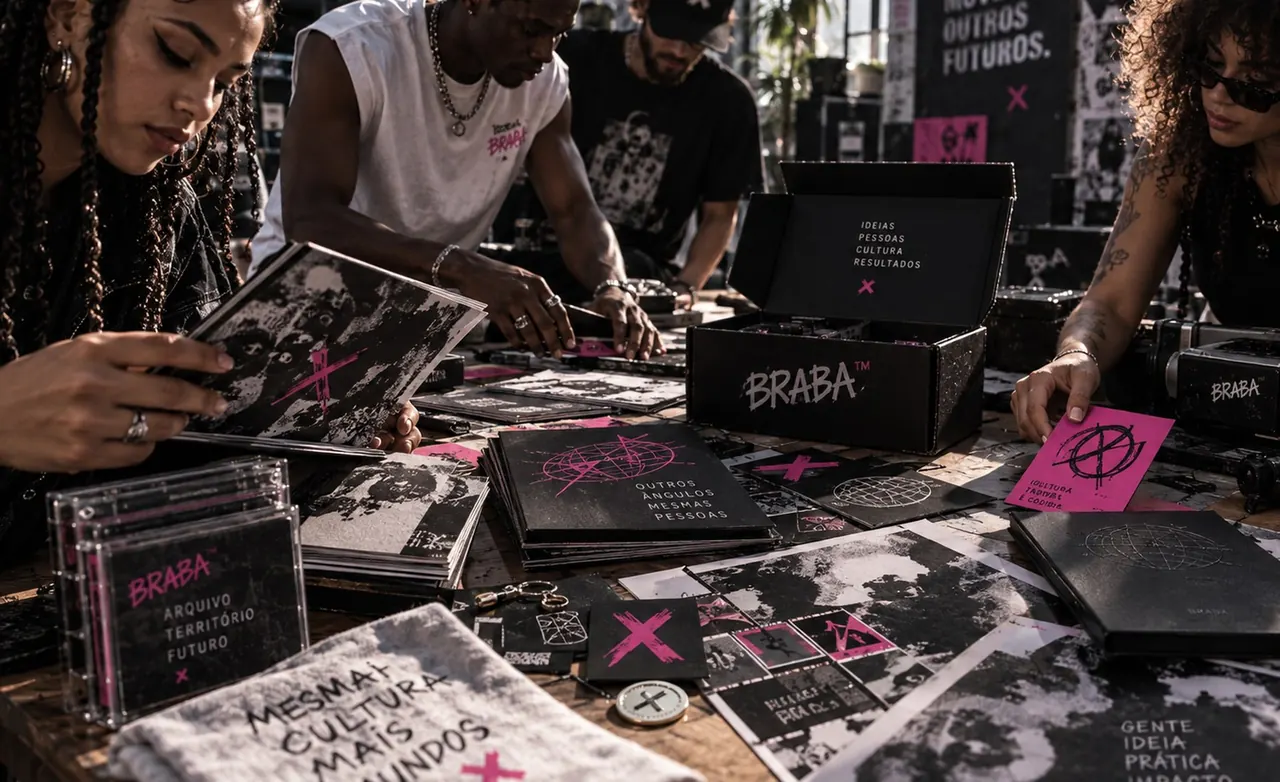
THE CAMPAIGN ENDS. WHAT DID THE BRAND KEEP?
A campaign begins with accumulated energy.
Strategy, production, talent, media, distribution and internal attention converge around a launch.
For a brief period, the brand has a world.
It has a language, a visual system, a cast, a story and a reason for people to notice.
Then the campaign ends.
The media stops. The team moves on. The audience is released. Most of what was built becomes a folder of finished assets.
The next brief begins close to zero.
The cost of permanent reinvention
Marketing often treats novelty as progress.
A new campaign needs a new line, new look, new cast and new cultural reference. Repetition is feared because repetition may feel predictable.
But memory depends on structured repetition.
People need enough continuity to recognise what belongs to the brand, understand how to enter and anticipate what may happen next.
When everything changes, nothing compounds.
The brand may produce many successful moments without building a recognisable cultural asset.
From execution to property
A property is not simply a campaign that returns next year.
It contains something capable of generating new expressions without losing its identity.
That something may be: a repeatable format, a cultural tension, a participation mechanic, a ritual, a character, a recurring role, a recognisable world, a seasonal event, a community behaviour or a narrative rule.
The property creates boundaries. Not everything fits inside it.
Those boundaries are useful because they allow the brand to expand without reinventing its meaning every time.
Ownership is more than legal control
Rights matter. A brand needs to understand what it owns, licenses and can continue using.
But cultural ownership is also behavioural.
Do people recognise the property?
Do they know what happens there?
Can creators contribute without dissolving its identity?
Can a new edition build on the memory of the previous one?
Can the system move between content, experiences, partnerships and commerce without becoming a collection of unrelated executions?
Legal ownership without audience recognition creates an asset nobody values.
Recognition without sufficient rights creates value the brand may be unable to use.
A durable property requires both.
Not every campaign should become one
Some ideas are designed for a particular moment and should end with it.
Forcing a short-term execution into a permanent platform can produce years of weak repetition.
The decision should be based on potential, not attachment.
Does the idea contain a tension that can keep producing stories?
Can people do something meaningful inside it?
Can different creators or partners extend it?
Is there a reason to return?
Can its value grow rather than merely repeat?
If not, let the campaign finish cleanly.
What should remain
At the end of a campaign, the brand should be able to identify what it has accumulated.
Audience memory.
A stronger behaviour.
A reusable format.
A creator relationship.
A participation system.
Rights.
Knowledge.
Evidence that improves the next decision.
If the only remaining assets are finished files and a performance report, the campaign may have delivered exposure while creating very little future leverage.
If every campaign returns the brand to zero, the real problem is not frequency.
It is ownership.
A campaign should end.
Its value should not have to.
WHAT THIS PIECE IS.
This article presents BRABA’s operating thesis or method. It does not rely on external performance claims.
WHAT THIS ARTICLE DOES NOT CLAIM.
This is BRABA’s Cultural IP thesis. A repeatable format is not automatically valuable IP; rights, recognition, recurrence and useful audience behaviour still have to be demonstrated.
“If every campaign returns the brand to zero, the real problem is not frequency. It is ownership.”BY BRABA